Continuing the story from my previous post—after leaving Russia, I promised to share how I found a small lifeline even in the darkest days. In Russia, I became fascinated with Zettelkasten—I read books, articles, and videos. I tried Notion and Obsidian, but they seemed too complicated. Apple Notes and Google Keep helped, but they lacked functionality. I analyzed the market and couldn't find the perfect solution—that's where the idea for Conoted came from. But it was born in Montenegro; before that, it was just an idea, not even a prototype.


Emotions: When you arrive in a new country, you don't know anyone, you don't know what to do, etc.—it's very difficult. I was lucky; I knew a family, the Viktorovs, and they helped me sort out legalization and basic issues. Then I met some IT people who organized a great networking event—we met every Thursday, where I met a lot of cool people and strong professionals in various fields. "It was like an anchor in the chaos around me." It really helped me get started living in exile—and I started working on a new project. Especially when I was surrounded by so many great professionals. I'd like to philosophize a bit and explain why I became interested in Zettelkasten in the first place. I've always had trouble structuring my knowledge. We're used to seeing knowledge in ready-made forms: books, articles, scientific papers. But all of this doesn't appear overnight. Any large work is assembled from small notes, ideas, and connections—and grows over time. This is precisely what captivated me about Zettelkasten. Notes aren't meant to store information. They're meant to spark something new. They're meant to generate new ideas. Each note is atomic—just a single thought—and through connections, they form a network that generates unexpected connections. This is bottom-up thinking: small mistakes coalesce into books, theories, and breakthroughs. And, at its core, Conoted is an attempt to create a space for precisely this process.

- I started experimenting with tools:
- Obsidian: Loved the graph view showing connections like a web of thoughts, but it felt overwhelming with plugins and setup.
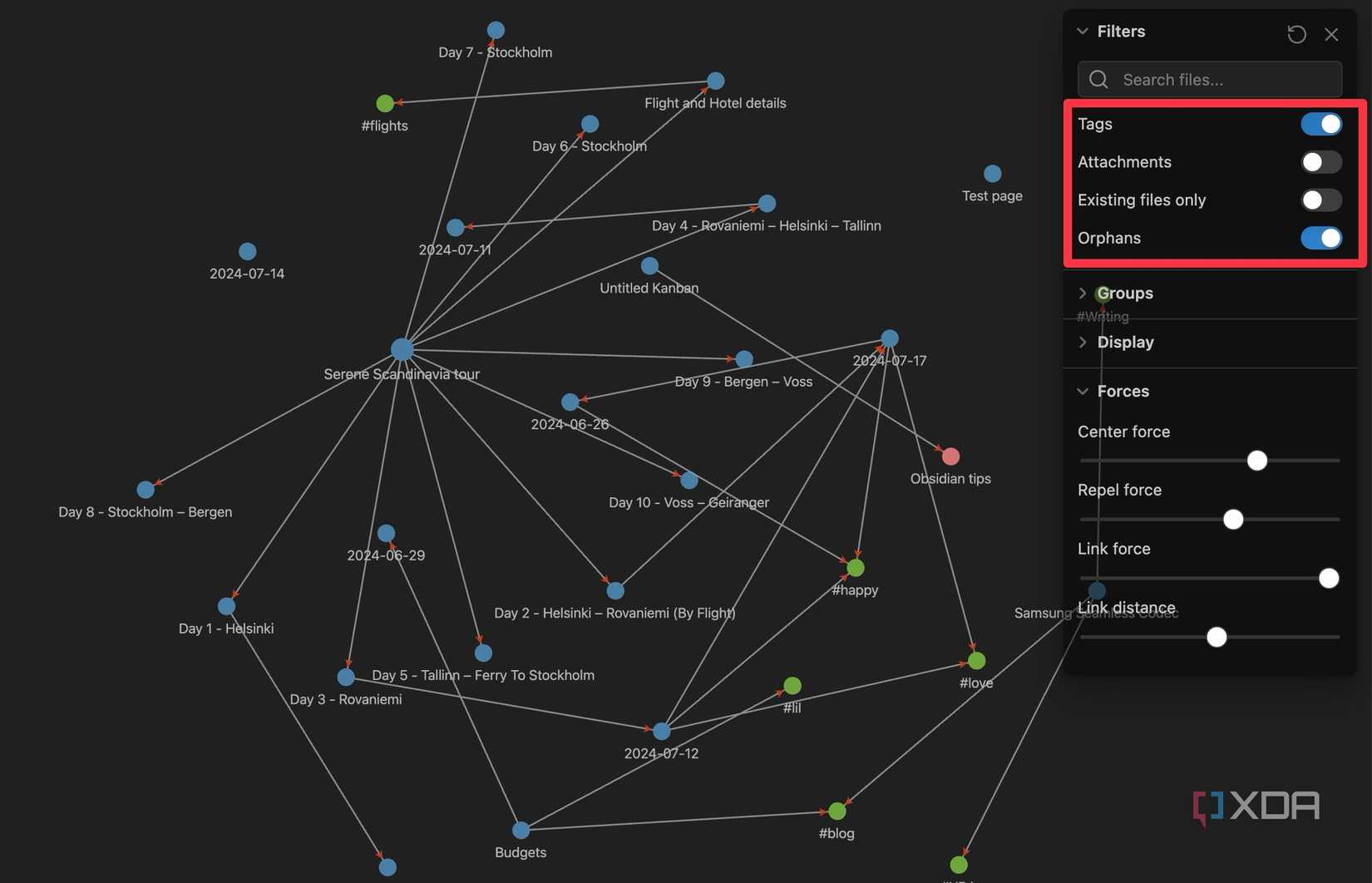
How to visualize notes in Obsidian using a graphical representation.
- Notion: Powerful databases and flexibility, but too structured — it felt more like project management than free-flowing ideas.
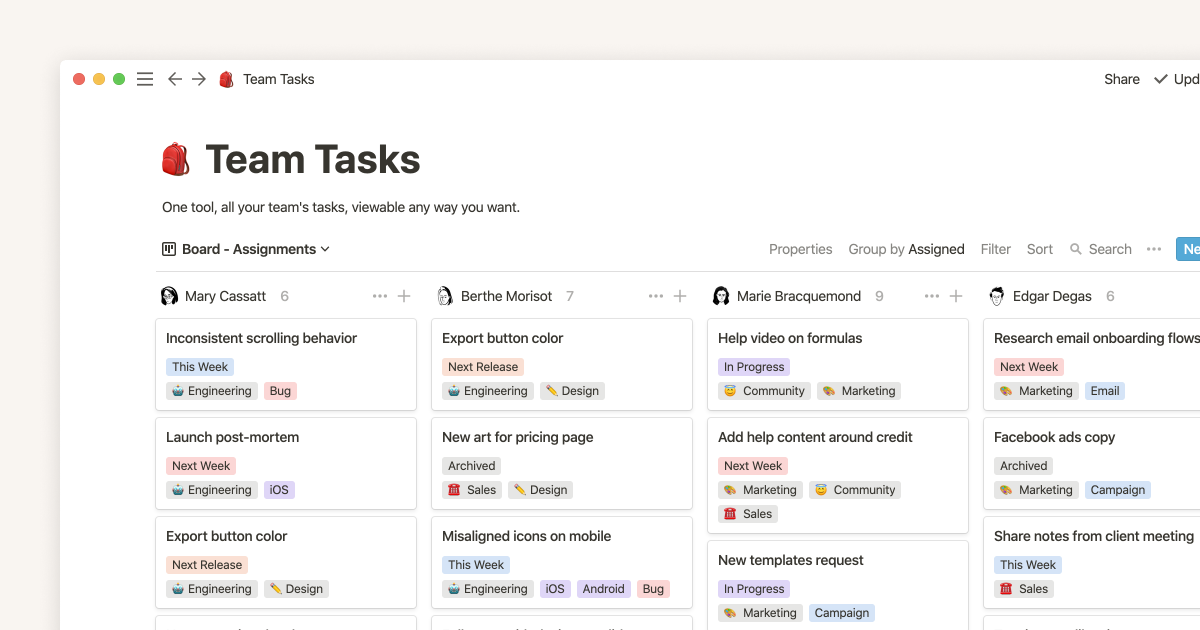
Creating a database
- Fell back to simpler ones: Apple Notes and Google Keep. They were quick and accessible, helped me start capturing thoughts daily, but lacked real linking, tagging depth, and that "network" magic.
Google Keep, the iPhone's note-taking app - Business Insider
I even did market research — scoured app stores, Reddit, forums for the perfect tool. Nothing quite fit: too simple or too complex, no seamless way to connect notes across chats or build growing knowledge.
The seed of Conoted was planted right there, in Russia — as a vague dream of "what if there was an app that did this perfectly?" But it stayed dormant. No prototypes, no code — just thoughts.
Only after arriving in Montenegro did it come alive. The calmer environment allowed me to finally sit down, prototype, and turn it into a real project. Working on Conoted became my way to rebuild life in emigration — a bridge from survival to creation.
Have you tried Zettelkasten? What tool do you use for your notes, and why? Share in the comments — I'd love to hear.
(Next: Emigrating to Montenegro — from shock to embracing "polako" 🌊)
